Marketing is no longer guesswork or hit-and-miss strategies in today’s digital landscape. Data is essential to support every action. Metrics are essential to get a proper understanding of your audience, growth and overall performance. This is where marketing KPIs become critical.
What are the KPIs?
KPIs(KPI Key Performance Indicator) can show how successful your campaigns and marketing efforts are in helping you achieve your goals. Rather than engaging with vanity metrics, KPIs help you ensure that you are working towards points on a dial that matter.
Understanding Marketing KPIs
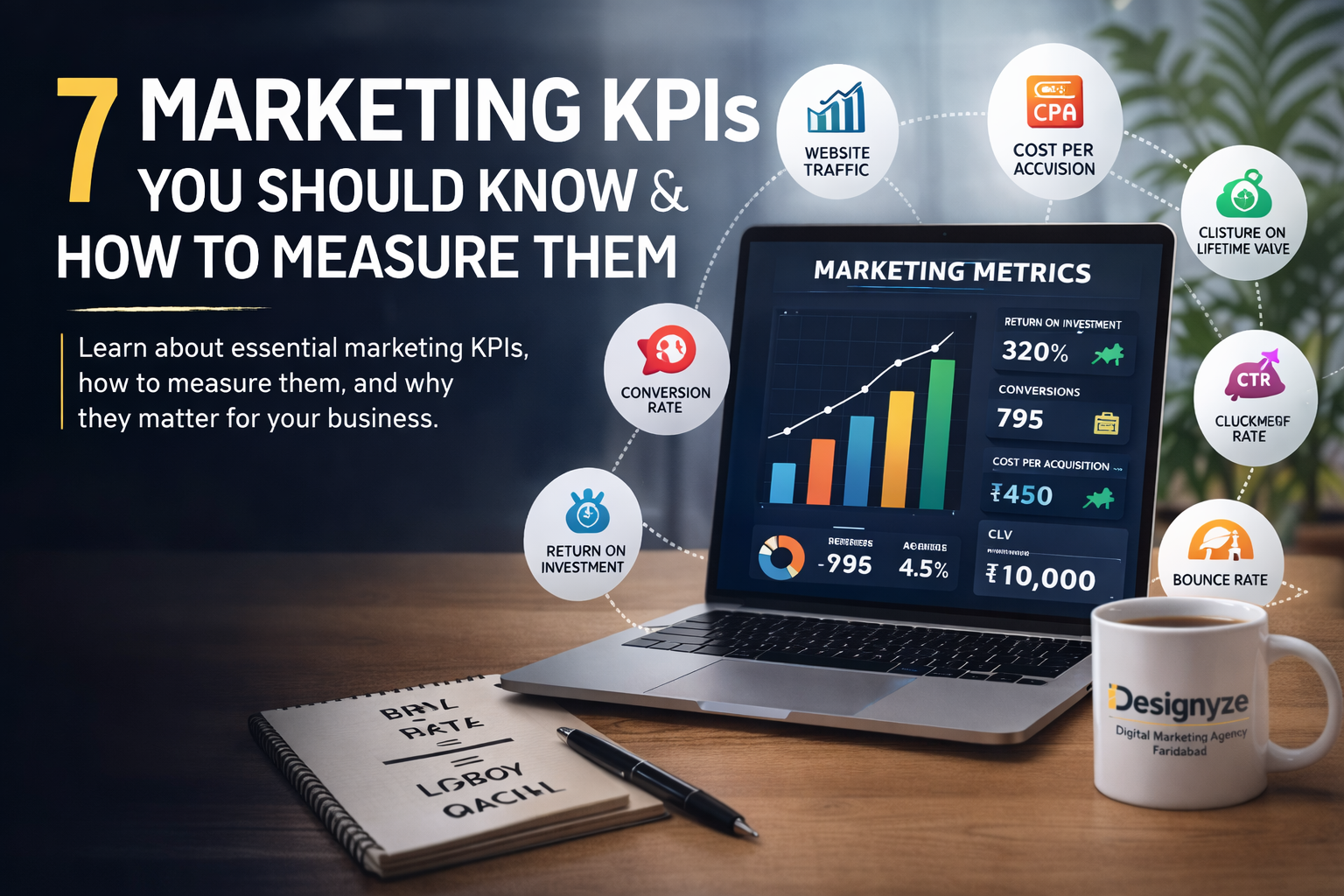
Marketing KPIs are metrics that measure the performance of your campaigns. Such indicators are directly related to your business goals like increasing traffic, generating leads and sales.
It is vital to choose the correct KPIs as not all metrics are created equal. Most companies track too many metrics without realizing their true significance. For this reason, agencies such as a digital marketing agency in Faridabad called Designyze often garner the maximum success when it comes to determining the most relevant KPIs so that your campaigns never lose sight of their efficiency and direction.
Website Traffic
Traffic on your website or online presence is one of the master indicators. It lets you know how many users are visiting your website and where they come from. This may be from organic search, paid ads, social media or direct visits.
For website traffic measurement tools such as analytics platforms offer detailed information about user behavior session length and page views. But traffic alone will not achieve success. Not all visitors translate to sales and not all of them is relevant to your business, so make sure you look if they engage with your content.
Conversion Rate
Conversion Rate is one of the most vital KPIs as it denotes how well your site/campaign converts visitors into purchasers or leads. A conversion can range from submitting a form to making a purchase.
Conversion rate: this KPI is calculated as the number of conversion we received divided by the total number of visitors and is multiplied by one hundred. A higher conversion rate typically means your messaging, targeting and user experience are in sync.
AgentID: There are always paths that take us from researching a product to making the decision to purchaseIt is not uncommon for teams like Designyze to work on how a landing page can improve conversion rates with clear calls of action and optimized user journeys.
Cost Per Acquisition
CPA, which stands for Cost Per Acquisition will tell you, how much are you spending in acquiring a single customer. It is especially valuable for companies using paid marketing campaigns.
CPA = Total campaign cost / no of conversions In other words: a CPA is good if it’s low.
A healthy CPA means never-ending testing, audience refining and campaign optimization.
Return on Investment
Return on Investment (ROI) is one of the most powerful KPIs in marketing. It communicates to you whether your campaigns are cost effective.
ROI is determined by the revenue gained from marketing efforts divided by cost. A positive ROI indicates you’re getting more value out of your campaigns than they cost while a negative ROI means that there’s room for improvement.
ROI-driven agencies like Designyze strive to ensure business growth in all marketing initiatives.
Click-Through Rate
Click-through rate (CTR) is how many people clicked on your ad/campaign vs the number of people who viewed it. This is especially valuable when assessing the performance of your ad creatives and headlines.
It is determined by clicks over impressions, or clicks/impressions x 100. Higher CTR typically means that your content is relevant and interesting to your target audience viewers.
Testing different creatives, improving copy, and refining the audience targeting is usually a common set of actions to increase CTR.
Customer Lifetime Value
Customer Lifetime Value (CLV) is the total revenue a company can expect from a single customer throughout the lifespan of their relationship. This KPI gives you insight into customer loyalty and potential, meaning that it shows how much worth a costumer has longterm, not just in terms of a sale.
This includes evaluating average purchase value, purchase frequency and how long customers are retained over the years. Having a higher CLV means that businesses can afford to invest more in customer acquisition.
This metric gives insight into creating sustainable marketing that emphasizes long-term growth.
Bounce Rate
This means the bounce rate measures visits where a visitor views only one page on your website before leaving. That tells you how relevant and engaging your site is.
A high bounce rate means your landing page does not meet user expectations or that users do not search for the same content. Conversely, a high bounce rate generally indicates poor engagement.
Page speed, content quality and user experience improvements are important to optimise bounce rate.
Final Thoughts
Marketing KPIs gives them good knowledge that what is actually working. The use of indicators allows for decisions to be made based on data rather than assumptions, leading to a cycle of testing and optimization.
In the end, KPIs do matter in 2026 — when competition is cut-throat as ever. Whether doing it yourself or partnering with professionals like Designyze, the key is continuous tracking, analysis, and optimization.
If used well, KPIs do not only measure success; they generate it.