Even if you have a great website, provide useful services and produce quality content, getting your business seen on Google can be hard. Many times the problem with driving traffic to your site is that you are using the wrong keywords.
Finding the right keywords for your business is essential to find out what your potential customers are searching for, what problems they would like to have solved and how they search for products or services similar to yours. When you develop a proper keyword research strategy, you will be able to enhance your search engine optimization (SEO), attract targeted visitors to your site, and produce content that can help support the growth of your business.
What Are Business Keywords?
Keywords are the terms that people input into search engines to find information, products or services. Keywords may indicate a person’s needs and where he/she is in the buying process.
A user who types “what is digital marketing” into Google will likely find information about the topic. A user who types “digital marketing agency for small business” is probably comparing agencies.
The way in which you understand the differences between these two types of search will help you select the most relevant keywords for your audience and for the objective(s) of your company.
Understand Your Target Audience
Before beginning keyword research, you need to consider what makes up your “ideal” customer. What are some of their needs? What types of challenges do they face? Where are they located? How often do they buy?
If you operate a digital marketing firm (such as Designyze), then the people who will most likely use your service are those that own small businesses and are seeking help with SEO services, website design/development, Google Ads management and/or social media marketing.
When you think of the exact terminology that your target audience uses to conduct searches online, you can use these search terms to develop potential keywords. Customer inquiries, previous sales discussions and common customer concerns (FAQ’s) are all great sources for developing potential keywords.
Use Keyword Research Tools
Keyword research tools assist in finding what people are searching for (search terms), how many times those items are searched for (search volume), how much competition there is for the same search term (competition), and other related searches. Some examples of these types of tools include Google Keyword Planner, Google Search Console, and Google Trends.
When you consider the value of a keyword based on its monthly search volume, remember that many people use search phrases that have low search volumes but represent users who have decided to engage with a professional.
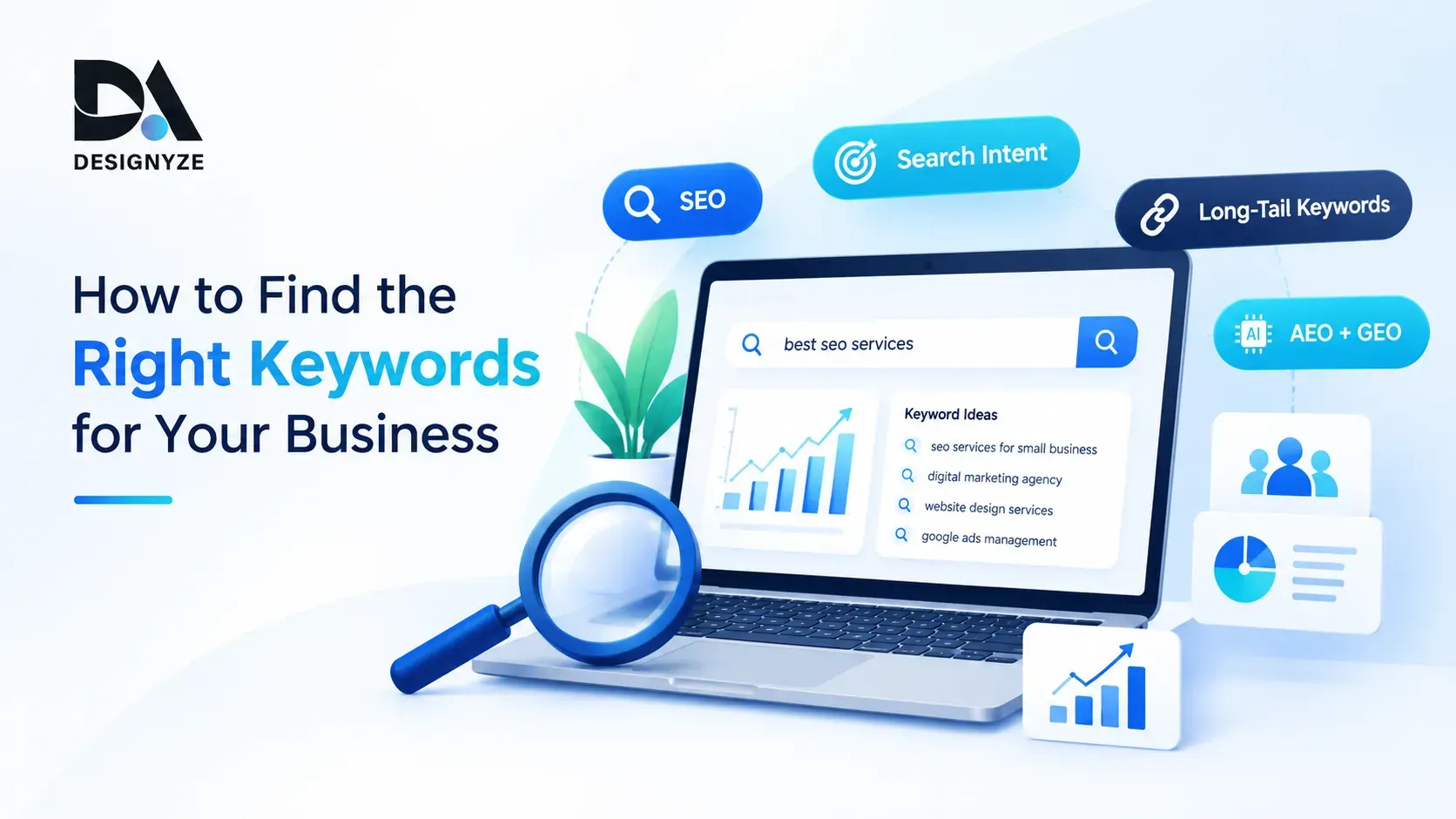
For example, “SEO” is general; “SEO services for small businesses” indicates what you are looking for in terms of services. Your decision will be based upon your services, who you serve, the competition you face, and the objectives of your website.
Focus on Search Intent
Search intent refers to the purpose of a user’s search. By understanding search intent, you can develop content that provides solutions to what users are looking for.
People looking for answers will use informational keywords like “how does SEO work?” Those looking to compare different options will use commercial keywords such as “best SEO agency for startups”. When people are ready to purchase or hire services, they will use transactional keywords such as, “hire an SEO company.”
Your writing must fit with what people are searching for. When people search for information on the internet, they generally want to learn something. Therefore, you may use informational searches to write blog articles. However, when people search for services on the internet, they are usually looking to buy products, hire contractors, etc. Therefore, your service pages should focus on keywords that describe those types of activities (i.e. buying, hiring, getting quotes).
Use Long-Tail Keywords
Long tail keywords are specific, multi-word search phrases.They’ll produce less search volume than broader keywords, but they’ll likely bring traffic from users with a more defined need.
Instead of focusing on just “website design,” a company might focus on “responsive website design services for small businesses.”
These specific phrases help you create targeted content that organically addresses the questions your customers have. Additionally, they will allow smaller businesses to compete for the same search results as larger companies, while reducing the reliance upon expensive keywords.
Check Competitors and Keyword Opportunities
Go through the websites of the businesses that compete with you in your market. Observe what subjects they write about, the way they organize their service page, and the types of questions their writing addresses.
You can use these observations to find what content is missing on your site, as well as areas where you could provide better content than your competition. Don’t copy from your competitors with this information, you can see if you should be optimizing the pages on your site that are receiving traffic, or if you should create new pages based on the search terms people are using.
Make Keywords Work for SEO, AEO, and GEO.
There are many advantages of keyword research besides using it for SEO.If you are looking to do SEO you should use relevant keywords, make helpful content, create clear headings, build internal links, and make sure your website is working properly from a technical standpoint.
Answer your customers’ most common questions directly to optimize for Answer Engine Optimization (AEO). Use headings that describe what each section covers so it’s easy to find the information.
For Generative Engine Optimization (GEO), write accurate and organized content, explain key terms used by professionals in the field, and show that you truly understand what you’re talking about. These three steps will allow your content to be found easier on search engines and other types of AI-driven discovery tools; however, there is no guarantee that your content will appear at the top of specific search result pages.
Don’t over use your main keyword. Make sure you use your primary keyword in a natural manner in the title of the page, the main heading, the first paragraph, and all other areas that are relevant for the use of the primary keyword.
Turn Keyword Research into Business Growth
The goal of keyword research isn’t just to get the most traffic. Your objective should be to find the right people that can use the products/services you provide.
At Designyze, a solid digital marketing plan begins with knowing your audience and building content around what they are searching for.By using keyword research, creating relevant content, and evaluating your results on a regular basis, you will be able to create a more successful web presence and online marketing campaign.
Start by figuring out the main services you offer, look for related search terms, and link those keywords to the appropriate pages. Regularly review your performance and adapt your approach according to shifts in customer needs and search behaviors.