Have you ever gone onto a site where it took so long for the page to load, click on things and have to wait for the site to respond, or have the content move around on you as you were trying to read? Most people who go to sites with this problem will become frustrated and will often leave the site without looking at anything else on it.
This is when the importance of core web vitals come into play. Core Web Vitals are used to assess the user experience of a website by measuring its load time, responsiveness, and visual stability. Enhancing the metrics measured by Core Web Vitals will help with your SEO strategy, provide a better experience for users, and allow you to make your website more effective for potential customers.
What Are Core Web Vitals?
Core Web Vitals are the core measures used by Google to evaluate how well real users interact with web sites. There are three main elements that comprise Core Web Vitals, which include: page load times, user interactions with the site, and the site’s layout or design.
While having good Core Web Vitals scores is one of the factors used by Google in their ranking system, those scores will not automatically lead to better rankings. It’s also necessary to have relevant content on your site, and a good user experience when people visit your site.
The Three Core Web Vitals Metrics
Largest Contentful Paint (LCP)
The Largest Contentful Paint measures the speed at which the largest content element that can be seen by users is displayed. An example of this type of element may include a banner image, a large headline, or some other clearly identifiable visual element.
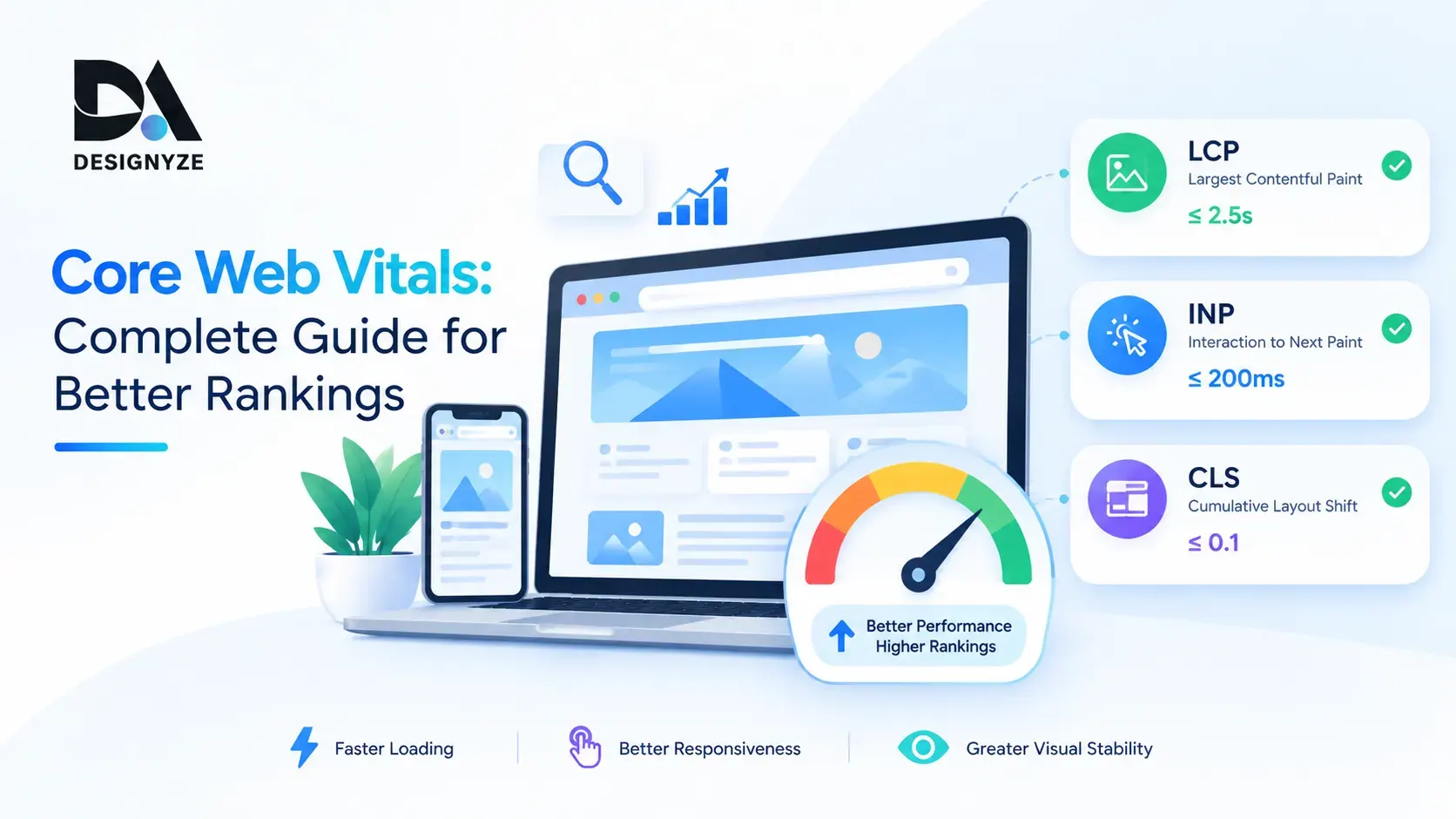
A slow response from your server, very large image sizes, and/or resource delays in being rendered may cause poor performance of your website when it comes to the time it takes for a user to load the site. Your LCP (Largest Contentful Paint) score should be 2.5 seconds or less.
Optimizing large images, using an effective hosting provider, minimizing non-essential redirects, and making the most critical parts of your page load as fast as possible will help you to enhance your LCP.
Interaction to Next Paint (INP)
Interaction to Next Paint is the measurement of how fast your website reacts visually to what you do on it (i.e. click, tap, press keys).
A great INP score is less than or equal to 200 ms. If a site responds too slowly to a user clicking on a button or selecting a menu option, they will likely perceive that something isn’t working properly.
Reducing unneeded JavaScript, making event-handling code more efficient, and reducing the use of resource-intensive third-party scripts will assist in increasing the speed at which your site responds to user interaction.
Cumulative Layout Shift (CLS)
Cumulative layout shift (CLS) is a measurement that determines when unexpected movement occurs on a web page as it is being loaded, or during a user’s visit.
A “good” CLS (Cumulative Layout Shift) score would be 0.1 or below. This means that if a person clicks on a link/button and then another part of the page changes positions because of an ad loading, the user experience will suffer due to the page being unstable.
By providing the size of images, leaving room for ads and other embedded content, and making sure that your website’s fonts and other design features do not experience unexpected changes in position, you will be able to enhance CLS.
Why Do Core Web Vitals Matter for SEO?
The performance of your website determines how well your visitors will be able to view your content and engage with your company. If your website is slow or unreliable, then it will be more difficult for potential customers to review information about your services, fill out forms, or purchase products.
Core Web Vitals are one of the elements that Google uses to determine how well your pages perform. While it may seem like improving your Core Web Vitals will get you to the top of the search engine results, it isn’t. There are other things that contribute to your search ranking such as having useful content, being relevant to what people are looking for, having a good technical SEO setup and being relevant to people’s searches.
For companies using SEO, a website that is quick to respond can provide an improved user experience for all of its users.
How to Check Your Core Web Vitals
The ability to determine if there are issues with the performance of your website does not require guessing. There are many tools available that can assist in identifying the areas of your website which may require further development.
Google’s PageSpeed Insights gives you reports on how well your pages perform and, when available, real user data. Google Search Console has a Core Web Vitals report to assist you in identifying groups of URLs that have performance problems. Lighthouse can also help you find technical problems when testing.
Be sure to check mobile and desktop performance as visitors can have vastly different experiences with your site based upon what type of device they use and how well it is connected to the internet.
Practical Ways to Improve Core Web Vitals
Reviewing your current performance reports on your website can help you to identify which pages are performing poorly. From there, you will be able to prioritize those pages that need attention. After identifying the pages that require work, there are several things you can do to improve the performance of each page. Some examples include compressing images, using modern image formats whenever applicable, implementing effective caching, and selecting a reputable web host.
Review any non-essential plugin and script, particularly those which negatively affect page load times or impact how users interact with your site. Ensure that your site has been designed responsively and that all image, banner, and embedded element locations are allocated appropriate spaces on each device.
After testing the modified page(s) once more, track how real users interact with the site throughout the course of several weeks. Focus on enhancing the user’s experience when interacting with your site rather than simply obtaining a high score in a lab setting.
Make Core Web Vitals Part of Your SEO Strategy
Core Web Vitals are essential components of maintaining a technically sound website. In conjunction with quality content, targeted keywords, easy to navigate structure and mobile-friendly design, these components will provide a solid base for improving organic search visibility.
A proper digital marketing plan is developed by Designyze to help clients reach their target audience through search results and the quality of user experience that they have once on the client’s site. With consistent monitoring of site performance (speed), responsiveness (mobile-friendliness) and consistency (layout) companies will be able to determine where improvements need to be made to increase visitor engagement.