
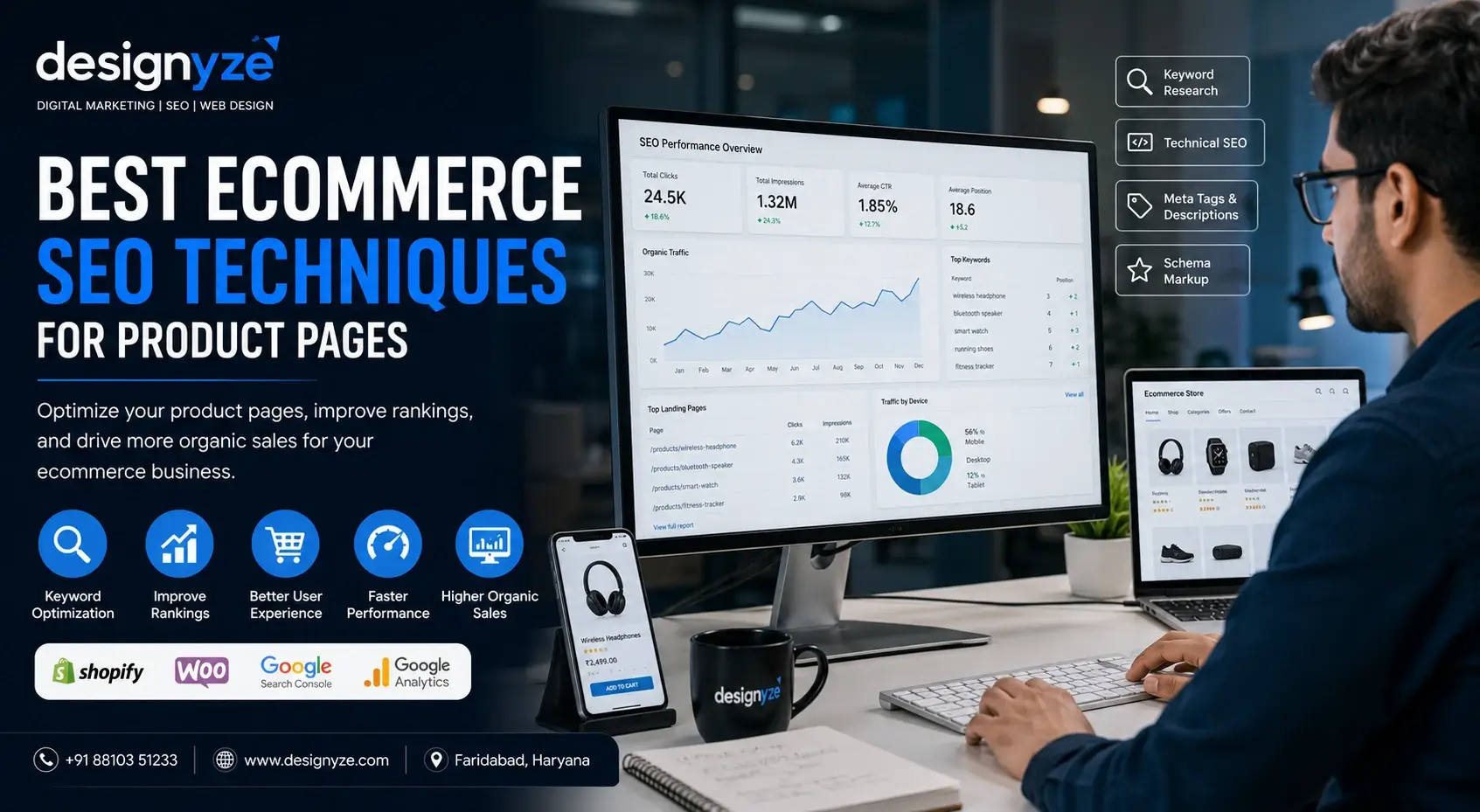
Product pages are the biggest drivers of organic traffic and online sales for ecommerce websites. Most e-commerce stores pour their money in ads, but they do not optimise their product pages for SEO. When employed diligently, ecommerce SEO tactics lead to higher rankings in search engines, drive qualified traffic and enhance the chance of conversions (without being completely reliant on paid campaigns).
As competition heats up in every category, with ecommerce also trending right now for Faridabad and India as a whole, optimizing your product pages for SEO has become essential. You now get favor from search engines when your pages are grid with useful information, speed, intuitive design structure and technical performance.
For ecommerce brands, SEO website strategies designed to help you see rankings and traffic quality improvements over the long term provide a great return on investment.
The Importance of Product Page SEO for Ecommerce Websites
Such ecommerce websites focus their SEO efforts only on category pages or maybe blogs while doing zero in optimizing individual product web pages. In reality, product pages frequently target high-intent users that are already searching for a particular product and higher up the funnel.
Product pages that are well-optimized have strong search visibility for specific product terms (such as product name or model number) and also long-tail searches where the intent is to buy. Such visibility drives targeted traffic that online shops perfectly convert.
Having an ecommerce website’s SEO also helps you gain the trust of your users, as optimized pages offer better information, a faster loading experience and improved navigation. These two factors affect both the SERP and visitors admiration.
Search Engine Optimization for Questions Keywords
Keyword research: Probably the most difficult yet essential aspect of ecommerce SEO for product pages! While most store owners are busy using high competition broad keywords, they overlook very specific search phrases that users actually enter before the purchase.
The key to effective ecommerce keyword research is knowing the intent behind what people are searching for, how they search, and the language buyers use. So the usage of keywords in product titles, descriptions, image alt text, headings and metadata should be natural — no punching yourself to repeat e-commerce keywords.
Long-tail keywords tend to perform especially well because they tend to target specific buyer intent. Product pages should not only contain generic product names (which users type in search), but also descriptive search phrases that match the behavior of real customers searching on the Internet.
This helps search engines relate the appropriate product much more precisely with placements of carefully selected keywords.
Key Takeaway — Write Product Descriptions with Value and Clarity
Most duplicate manufacturer descriptions are used by similar ecommerce websites, which can lead to promote non-unique content and reduce search presence. Search engines favour content that is original, and would be of help to shoppers in terms of more product information.
Can’t read the postcode on a dress screen with blurry images?⇩ENGAGING PRODUCT DESCRIPTIONSKnowing how to write SEO optimized product pages in Shopify is crucial, especially if you rely on organic Google traffic since an increasing number of eCommerce store owners are applying this strategy. Product page description must not restrict to listing the technical specifications but enhance knowledge about product benefits, practical usage, details & quality and buyer related inquiries.
A well-structured content structure is also a better user experience. Product pages with short paragraphs, less cluttered formatting, and a logical flow of information will keep visitors engaged longer.
Signals of high-quality content boost ranking potential and conversion performance.
Ecommerce Technical SEO is Key
Technical SEO is the set of tasks that directly impact how search engines crawl, index and rank ecommerce websites. Technical problems can hinder the ranking of even the most well-written product pages.
Some common practices of technical SEO for ecommerce are page speed, mobile-friendliness, URL structure, crawlability, schema markup and snippet optimization, image optimization and internal linking. Ecommerce websites especially is often multilingual with hundreds or thousands of pages so technical optimization is magnified.
The increasing bounce rates due to the slow-loading product pages also lower your search rankings. Website structure is simplified, small code and large images are not used – such a website opens faster.
Using structured data markup on product pages can also enable ratings, pricing, availability and reviews to show up directly in search results to increase your click-through rates.
Rankings Affected by Product Images and User Experience
Search engines are ranking the ecommerce websites based on user experience signals more than ever. Desktop and mobile experience of product pages should be fluid.
Better product images increase engagement and purchase confidence. Optimized image filenames and descriptive alt text help with SEO performance, www.
User easy access to information is an advantage for navigation clarity, mobile use, product filters and clean page structure. The only caveat is that ecommerce product page optimization should always strike a balance between optimizing for search engines and usability for customers.
Even the so-called perfectly optimized keyword usage may cause your ranking to drop if it results in poor user experience.
Internal Linking Strengthens Ecommerce SEO
Sometimes even large sites overlook this, but internal linking not only assists with search engines deciphering the structure of your website but also helps distribute authority to important pages on your site. The product pages should flow seamlessly with category, related products, purchase guides and blog content.
For instance, ecommerce stores can connect commercial product pages with the informational articles related to its usage, maintenance advice or comparatives. Using this tactic boosts topical relevance and keeps visitors on the site longer.
A good internal linking structure enhances the crawl budget efficiency for larger ecommerce businesses as well.
How the Benefits of Ecommerce SEO Help Boost Sales Over Time
While paid ads quickly generate traffic, SEO offers longer-lasting visibility that delivers benefits long after the initial set up. Which you know is great because e commerce digital marketing businesses see stronger profitability with paid success that has had support from gather round me go oh let yes back avery.
SEO is thus a real goldmine, as organic traffic usually consists of users who actively research products.
Professional SEO services for ecommerce websites are helpful in identifying technical flaws, improving content quality, optimizing product architecture and enhancing overall search visibility. Which leads to sustainable growth beyond the confines of short-term advertising performance.
Conclusion
Ecommerce SEO techniques allow online stores to get their products online, reach potential customers searching with high intent, and drive long-term sustainable organic decreases in sales. Even product page optimization has become more important than putting a keyword here and there like back in the day. Businesses should prioritize on technical performance, user experience, unique content, structured data, and search intent alignment.
Designyze is an ecommerce SEO, website optimization, and digital marketing solution designed to help online businesses rank better, be more visible online & sales performance. For brands looking to rank competitively over the long-term, product page SEO is still one of your most valuable investments.