
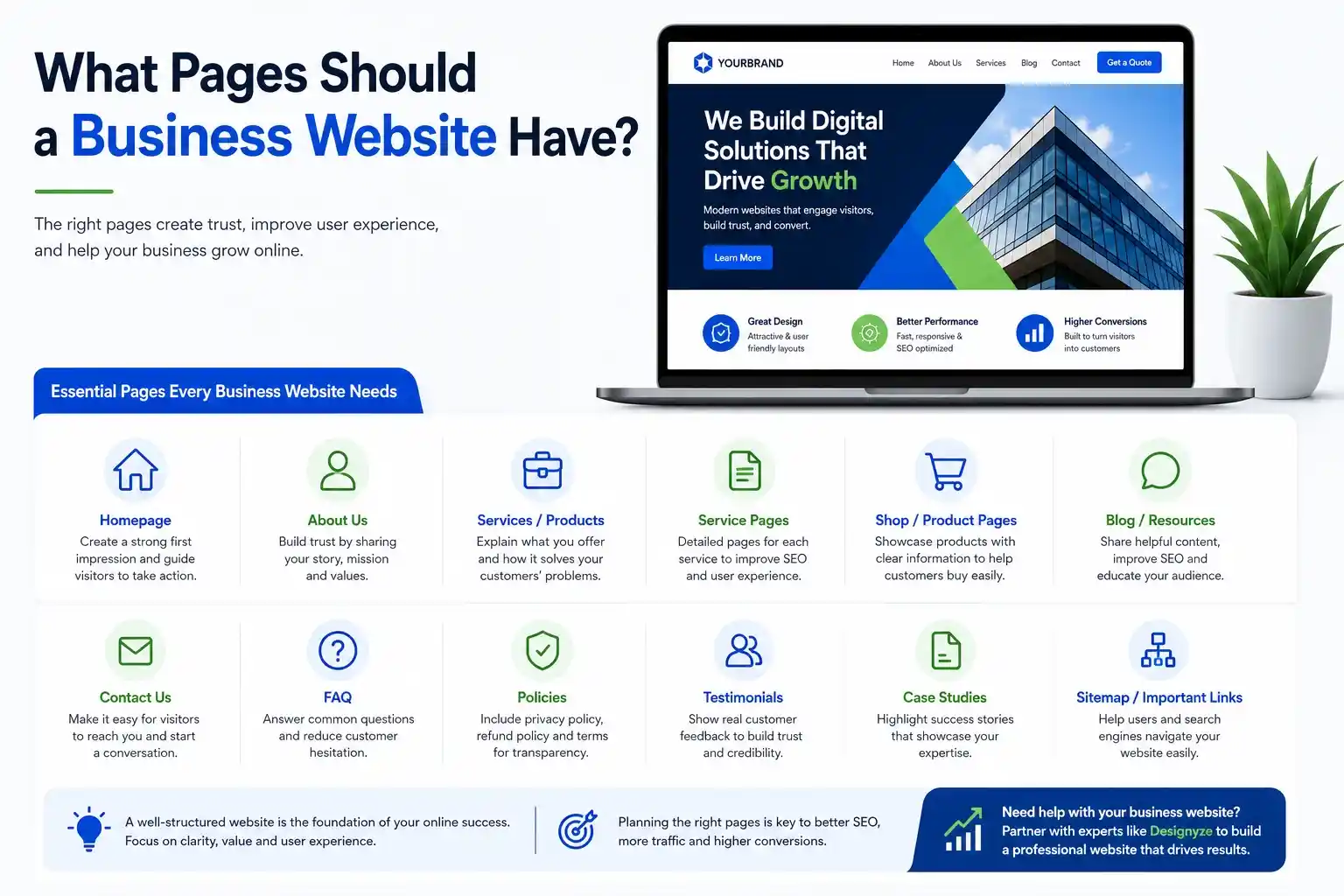
Your business website cannot merely be a presence on the web. It is necessary to navigate visitors, provide answers and build trust and ultimately assist conversions. But still a lot of firms carry on investing in business website improvement without totally designing the structure of this content material. Poor navigation, unclear messaging and missing pages not only dilute user experience. It also translates to reduced search visibility.
Mainly for D2C brands, the website is often one of the first — and main — touchpoints with your customer. Each page also serves as a little puzzle that helps users make sense of the business and perhaps decide to dive deeper. A well-organized business site that blends usability, SEO and communication by Designyze.
Significance of Website Structure for Business
A good business website structure helps users find their way naturally while also enabling a better understanding of the website by search engines. Search engines analyze how pages are interlinked, whether the content is well structured and if it easy to find what visitors want.
Many business owners who fail to plan well have ended up with very cluttered navigation or multiple pages that are unconnected and never combine for great user experience. This friction for users leads to poor SEO. An organized company website page list boosts discoverability and encourages visitors to stick around longer.
Good structure also supports scalability. As businesses expand services, products or even locations-and the site can grow seamlessly without becoming confusing.
The Homepage Sets the Direction
Some of the most important pages, you train one as a business website homepage. It is kind of like a brand call to action, it helps decide whether or not the users would continue browsing through.
For companies, this implies a conceptual strong homepage design (my opinion) with clarity over overload. The business that is showcased here should be easy for visitors to understand exactly what the company does, who it helps and why it matters. Communicates succinctly and use visuals to support credibility or professionalism.
Navigation should also remain simple. On mobile devices, visitors can be overwhelmed by a plethora of options in the menu. Business website design services should ensure that the designs are clean, fast loading speed and designed for user flow.
The homepage serves as a linking pin between your marketing activities and conversions for D2C brands. Each of the section should orient users easily to products, services or inquiries.
Why and how about pages? Build Trust and Brand Identity
Tons of ventures think about the estimated worth of an establishment page. However, customers really frequent this section before taking decisions when they are dealing with new-age or growing brands.
How can one write about page which tells the company story, their expertise, mission and methodology without overwhelming each with self promotion? It gives brands a more human and relatable image.
Localized context can take paranoia to the next level and help businesses in ersthetical Faridabad, a tough region to penetrate. Talking of experience in the market serves to create a stronger sense of relevance by region rather than having location be repeated too frequently.
A small business website developer with a clear understanding of branding psychology, almost always designs the about page as part of valuable asset to build trust rather than filler content.
The Design of Service and Product Pages Should Be Strategic
Service page design is vital to SEO and conversion optimization. Or they really are simply generic pages that can never perform well in search or as a pointer for user engagement.
Every service or product page should be about one type of offering and answer practical customer questions clearly. They want to avoid digging through pages and try to figure out the outcomes, processes expectations around pricing timelines of services or an explanation of what + how something will benefit them.
More specific visit pages are better for keyword targeting. Instead of depending on a top-level page, businesses now can establish topical authority around distinct services or categories.
When professional business websites are created, they often form specific landing page content that reflects the intent of what customers looking for your services types in to a search bar, rather than vague general descriptions.
And Contact/Support Pages Provide Better Conversions
Contact pages seem like an easy enough concept, but the reality is a poorly designed contact experience typically lowers inquiries substantially. Leave no stone unturned so that the users can reach out to you easily with your forms, contact details, maps or talk and communicate.
Pages that are related to support also help with user confidence. With FAQ sections, shipping policies, refund details and customer support information present on your website you eliminate uncertainty.
In addition to being important for SEO, these critical website pages improve the user experience and lower bounce rates. Websites that offer useful, easily accessible information are given priority by search engines.
Blogs & Resource Pages l SEO boosters
The idea is that content-driven pages allow businesses to incrementally expand their search presence in the long term. Blogs, guides, case studies and learning tools provide opportunities to target informational searches while demonstrating authority in a niche.
When building a site structure for business websites, content categories should align with your long-term SEO strategy. This context also permits brands to surface informational content that attracts users earlier in the customer journey, well before they are destined to purchase.
It also helps build trust with educational content in the case of D2C brands. Helpful materials show a knowledgeable business rather than pushing sales.
Agencies like designise
The teams at Website Development in Faridabad generallyFocus on SEO architecture as much as the content scalability, because without a visual designThere is no sustainable growth.
Clear, usable content has more value than unnecessarily divided sections. A small, properly structured website usually ranks better than a large site that has little organisation.
Internal linking also matters significantly. Pags should engage in a natural manner so that users can explore related information without confusion. This allows for better navigation and helps search engines crawl the website more effectively.
Common Mistakes Businesses Make
A common mistake is launching the websites with not enough content. If the site uses placeholder pages, offers only a thin description of its services or is devoid of support information then this will inevitably create an unenthusiastic first impression.
Even copying competitor structures without insights to real customer needs is a very common mistake. Different businesses have different audiences, goals and paths to conversion.
But mobile experience is also related to how businesses ignore it during development. As most traffic is from smartphones these days responsive design needs to take precedence throughout development.
Conclusion
The working structure of a professional business website and page strategy is key to its success. Not just simple placeholders, essential website pages govern customer experience, SEO performance and business credibility.
Each section from business homepage design to detailed service page design & content plan can enhance usability and trust.
Your Questions About Designyze, Answered Here

What are the most important pages for a business website?
The most important pages usually include the homepage, about page, service or product pages, contact page, FAQ section, and policy pages. These pages help users navigate and understand the business clearly.
Why are service pages important for SEO?
Dedicated service pages help target specific search queries and improve topical relevance. They also provide users with detailed information that supports conversions.
How does website structure affect user experience?
A clear business website structure helps users find information quickly and reduces confusion. This improves engagement and encourages visitors to explore further.
Should small businesses include a blog on their website?
Yes. Blogs support SEO growth, attract informational traffic, and help businesses establish expertise within their industry.
How often should website pages be updated?
Businesses should review and update website pages regularly to keep information accurate, improve SEO performance, and align with changing customer needs.
Showcasing projects that reflect quality, creativity, and results.
Join our community to exchange insights and grow together.