Introduction
The ecommerce sector is also growing on a rocket-propelled course, opening new paths for businesses to connect with clients around the world. There are stiff competitions coming your way as more brands jump in the online marketplace. Simply launching an online store is not enough anymore. Innovative open sourcesthat businesses are using to engage customers, improve the experience of a prospect and increase conversions.
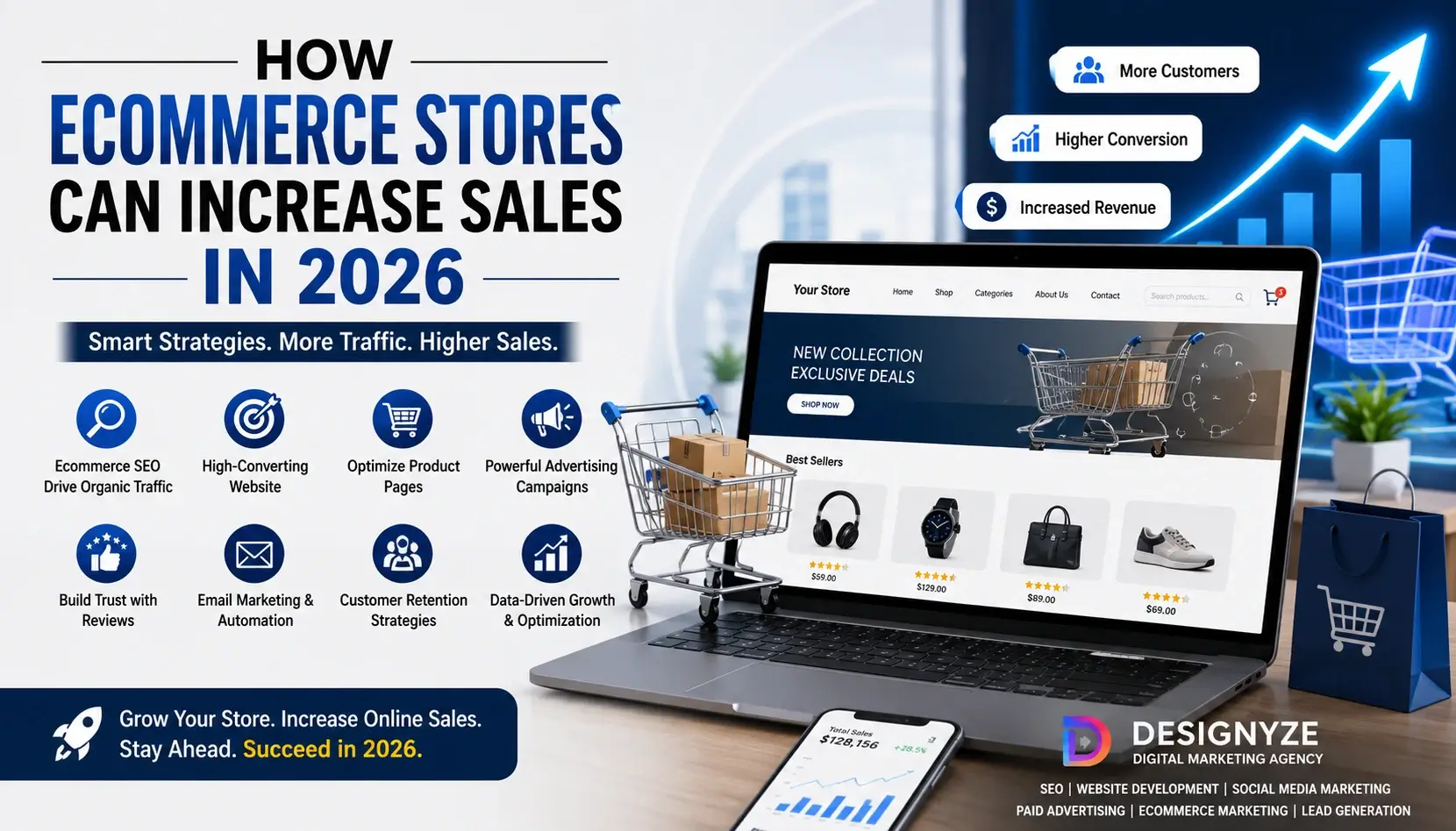
In short, to boost ecommerce sales in 2026, good SEO and marketing with customer retentive and a conversion-oriented website design will be equally important. This guide dives into actionable ecommerce strategies that businesses can use to increase revenue and scale sustainably.
Understanding Ecommerce Trends in 2026
With the change of technology, consumer behaviour is changing as well. The modern shopper anticipates a website that loads in the speed of light, tailored item recommendations or suggestions, easy and convenient checkout experiences, and excellent customer service.
Naturally, even now in the days prior to spending any money buyers perform product research but it is also into online before making a purchase decision. From comparing prices to checking online reviews and assessing brands across multiple channels. These types of visitors turning into customers is any company that offers relevant content, solid social proof, and frictionless shopping.
Understanding these evolving expectations of consumers, is undoubtedly half the battle in scaling ecommerce.
Make Your Website Conversion Ready
You need to get traffic to your site but converting that traffic to customers is the real key. And this is when the ecommerce conversion optimization kicks in.
The ecommerce site should be highly optimised for;
Quick load speeds with uncomplicated job at tension relief potentials.
Performant responsive design across mobile and all devices.
Simple navigation Helps with easy searching the products.
Designed With Defined Categories And Availability Option
Checkout is simple, has few steps that they have to go through.
Trust Factors — secured payment & reviews
Conversion rates, and revenue, are also affected and improved by small differences in the usability of websites.
Invest in Ecommerce SEO
Search engines are still a great source of long-term traffic. A good ecommerce SEO makes getting targetted, high-intent traffic to your store.
Effective ecommerce SEO includes:
Customer search intent-based keyword research
Optimized product titles and descriptions.
High-quality category pages.
Internal linking structures.
Image optimization.
Technical SEO improvements.
Creating Good Content via Blogs and Guides
Higher rankings = more traffic over time → intangibles (this is an asset you own not fully this off paid ads [e.g. Google Ads]).
Improve Product Pages
The pages that are getting people to buy or leave without making a purchase, the product pages. If optimised well, these pages cannot assist directly in online sales.
Successful product pages typically include:
Detailed product descriptions.
High-quality images from multiple angles.
Videos demonstrating product usage.
Clear pricing information.
Customer reviews and ratings.
Frequently asked questions.
Strong call-to-action buttons.
If Shoppers have no idea then they are never going to purchase from you so gets it tell them & make their confidence very strong!
Leverage Social Media Marketing
Social Media Platfoms Are A New Sales Channel For Ecommerce Brands Having the presence in platforms like Instagram, FB and to some degree Youtube or Pinterest empowers brands to show their product, assemble a community and collaborate with customers.
So, below are some of the ecommerce marketing tactics that will work on your socials:
Publishing engaging product content.
Creating short-form video demonstrations.
Running influencer collaborations.
Sharing customer-generated content.
Promoting limited-time offers.
Hosting live product showcases.
Social media allows brands to remain front-of-mind with customers throughout the entire buyer journey.
Use Paid Advertising Strategically
Organic marketing can only bring you so far, employed effectively paid advertising will increase your growth tenfold.
Ecommerce advertising campaigns today have a high number of targeting options that help them to reach pressure groups (dealers, customers) through location and demographic data.
Popular advertising channels include:
Google Shopping Ads.
Google Search Ads.
Facebook Ads.
Instagram Ads.
YouTube Advertising.
Remarketing Campaigns.
Advertising is about testing and tweaking to get your dollar to go as far as it will go.
Focus on Customer Retention
We both know that it costs more to acquire a new customer than to retain an existing one. That is why customer retention strategies are so key to long term profits!
Businesses can improve retention by:
Providing exceptional customer service.
Offering loyalty programs.
Sending personalized recommendations.
Creating discounts only for loyal clientele
Following up after purchases.
Engaging customers through email marketing.
MOS customers are delighted enough to buy from the brand repeatedly, and recommend further purchases with friends.
Email Marketing Still Delivers Results
Even in the era of social media — email still beats every other channel selling ecommerce goods.
Creative email campaigns are designed to help you open e-opening a leads, recapture abandoned carts and draw attention to another purchase.
Common email strategies include:
Welcome email sequences.
Product recommendation campaigns.
Seasonal promotions.
Abandoned cart reminders.
Customer appreciation emails.
Post-purchase follow-ups.
A solid plan for email marketing can maintain a steady stream of income to your regular ventures, but furthermore allows you to establish even more trust with your customers in the long term.
Personalization Is No Longer Optional
In the present day, modern consumers expect a personalized shopping experience. They converting dramatically better the brands who personalized messaging, suggestions and offers to customers.
Personalization can include:
In case someone forgets your name, the name of a student or any company visiting their website may help them remember you.
Personalized email campaigns.
Dynamic website content.
Targeted promotional offers.
AI-powered shopping assistance.
These techniques only add a few details to the user experience and are one of the great contributors in helping ecommerce revenue generation.
How To Choose The Right Marketing Strategy For Shopify Store [Updated, 2023]
This, from another angle, and why most ecommerce stores the world over are built on Shopify. Shopify marketing is more than just building a store.
Email automation.
Conversion-focused design.
Integrated social media marketing.
Data-driven advertising campaigns.
Combined, these strategies will drive the best growth and revenue potential.
Use Data To Make Better Decisions
Analytics is the foundation for a successful ecommerce business. You will also need to learn how to monitor customer behavior in order to detect opportunities for improvement.
Store owners should regularly monitor:
Website traffic.
Conversion rates.
Cart abandonment rates.
Customer acquisition costs.
Average order value.
Customer lifetime value.
And with that knowledge of these metrics, businesses can better themselves and make sound decisions.
Why Choose Designyze For Ecommerce Business Growth
About Designyze:Designyze is an ecommerce digital marketing solutions agency who specialize in helping you scale-your online business-to measurable growth with integrated solutions. Services in SEO (Search Engine Optimization), Web Development, Social Media Marketing, Paid Advertising, Lead Generation and Performance marketing
Designyze leverages a mix of technical expertise and data-driven processes to bring growth to your ecommerce store with increased visibility, qualified traffic, and more sales.
No matter if you have a Shopify based store or Enterprise level D2C brand with already running ecommerce business, we would come up with bespoke marketing solutions.