When someone is looking for a service near them, many people will go to Google to look for businesses that are reputable. Some may use ads that appear at the top of the search results; others may look at Google Maps, review other customers’ feedback, and/or view a business’ website prior to making a choice. Both methods can lead to acquiring new customers for local businesses, however, they operate in different manners.
Local SEO vs. Google Ads is based upon the amount of money that you wish to invest into advertising, the time frame in which you would like to receive responses to your advertisements, the geographic location that you provide services to, and the amount of competition that exists within the sector that you operate. There are no right or wrong answers when comparing local SEO to Google Ads; both forms of advertising have advantages and disadvantages. It is more helpful to look at both forms of advertising as having potential benefits for your business.
How Local SEO Helps Businesses Attract Customers
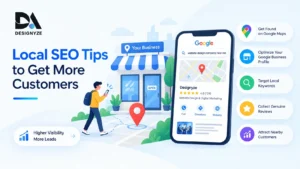
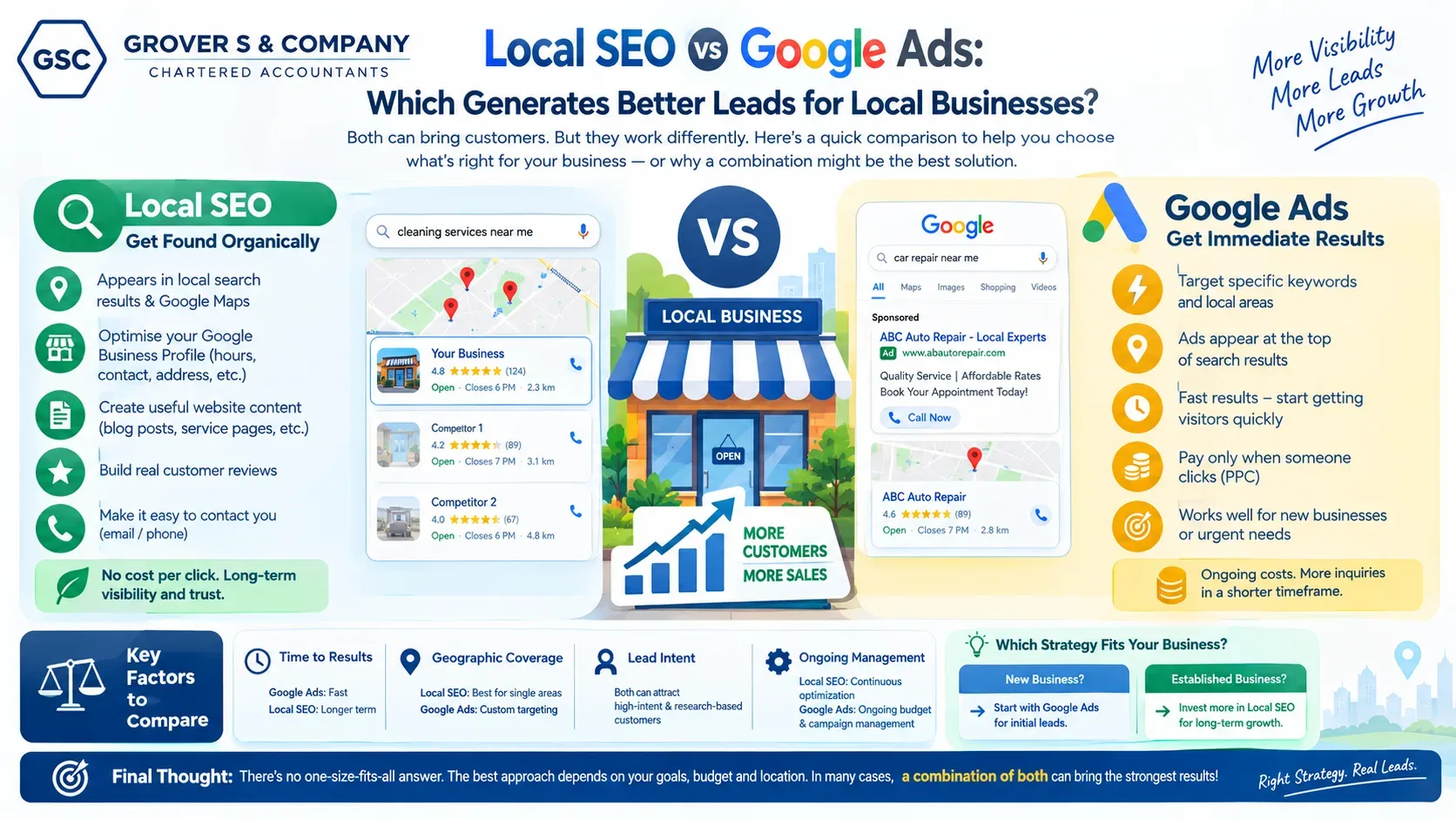
Local SEO allows a company to show up in relevant local search engine results as well as on Google Maps. There are several ways to improve your local SEO such as: keeping your Google Business Profile updated with current business hours, contact numbers, address, etc.; adding content to your website that will help potential customers find you (e.g., blog posts, service pages, etc.); receiving real reviews from actual customers; and allowing individuals to easily reach out to you via email or phone.
For instance, when an individual is looking for a local electrician, they will typically compare the business ratings, services provided, distance from their home/office and how available the business is prior to making contact. When you provide a complete business profile along with a useful website, you are providing your potential clients with the opportunity to easily select your business.
Local SEO has an additional benefit. Your business does not incur costs when users find you through organic search. After your business develops a good level of visibility, you can expect to receive inquiries for a long time. There is no guarantee that you will start to see positive results quickly.
How Google Ads Brings in Leads
Google Ads offers a different method of advertising to people who are looking for what you provide. With paid search locally, businesses can develop ads based on specific keywords related to the products or services they offer, and then determine where those ads will appear by targeting the geographic areas of service.
The cleaning company has recently opened and requires bookings in order to begin operating. Although waiting for organic visibility to develop will take time and may not provide immediate results, a properly structured Google Ads Campaign would allow the company to connect with individuals who are currently looking for professional cleaning services.
The major benefit of this method of advertising is its speed. When an advertiser approves and launches a campaign, their ads will start driving visitors to their website as well as potential customers.
On the other hand, there are ongoing costs associated with advertising. For example, if your industry has many competitors, then you may need to increase your advertising spending. Also, you should keep in mind that clicking on an ad does not guarantee that someone will purchase anything from you.
Local SEO vs Google Ads: What Should You Compare?
The first main difference is how long it will take to get people to your website. While Google Ads can bring people to your site very fast, local SEO takes much longer to bring you people.
Geographic coverage also impacts SEO. A business that only serves a single neighborhood would likely be most effective by focusing on their Google Business Profile and other relevant local pages. However, if a business provides services across multiple cities then a much larger SEO strategy would be needed. This might include a campaign focusing on specific areas or possibly even both. Google Ads location targeting allows you to choose where your ads are displayed. However, this does not ensure that all inquiries will come from a potential ideal customer.
Lead Intent is also a key factor. A user looking for a quick fix might be ready to call you right away. A user comparing different local providers may spend a lot of time reading reviews, visiting their web sites, and requesting quotes. Both paid and organic searches can generate both types of users depending upon the specific search query and the content displayed.
On the other hand, ongoing management is different as well. SEO requires continuous monitoring of your business information, website content, reviews, and local competitors.
Which Strategy Fits Your Business?
If you have a brand-new business that has no established reputation, then Google Ads can be a good way to get some initial inquiries in, and once you are more visible locally, you will be able to do other things to increase your brand recognition. It is important for you to begin with a realistic amount of money for your ads, and then monitor whether or not those leads justify the cost of the ads.
A company that has been operating for a while, and therefore, has built up a regular customer base, will probably find it advantageous to spend more time/money/resources on local SEO. By increasing your local search engine visibility, you will be able to attract new customers who are looking for what you offer via Google or Maps. Additionally, if you have competitor(s) who are currently spending heavily on advertising, you may want to continue to invest in organic search visibility to give yourself a second avenue for attracting leads.
How to Measure Which Channel Generates Better Leads
Performance should not be evaluated based on the number of clicks alone. You should record the total number of inquiries that each of your advertising channels produce, as well as the portion of those inquiries that are valid leads; additionally, you should track the percentage of those valid leads that turn into paying customers, along with the total amount of revenue generated by those customers.
In addition to this, local SEO will bring customers at a lesser price over a longer period of time than Google Ads which may produce more inquiries in a shorter timeframe. However, the reverse can occur in a very competitive environment.
Final Thoughts
So, which one is better, local SEO or Google Ads? That will depend upon what is required of your business at this time. When you need immediate results and targeted advertising, Google Ads may be the best option. Local SEO provides businesses with long term visibility within the area they provide service.
Many times, a combination of both can be a very reasonable solution for many small businesses. Your focus should be on getting the correct type of customer, measuring how well you generate leads, and spending money with those methods of advertising that can help make you more money. If you put thought into what you do, you will find that you are better off than if you just went with a method because it was “in”.