Introduction
We are no longer shopping the same way we did several years ago. Physical stores have existed since time immemorial, but online stores soon became popular among shoppers because of their convenience and accessibility. From a business point of view, which of these two models—or combination of models—works best will depend on the business objective, target market and resource levels. Having two types of store understanding, between physical store and online store can help to make better decision in this competitive market place.
What Are Physical Stores?
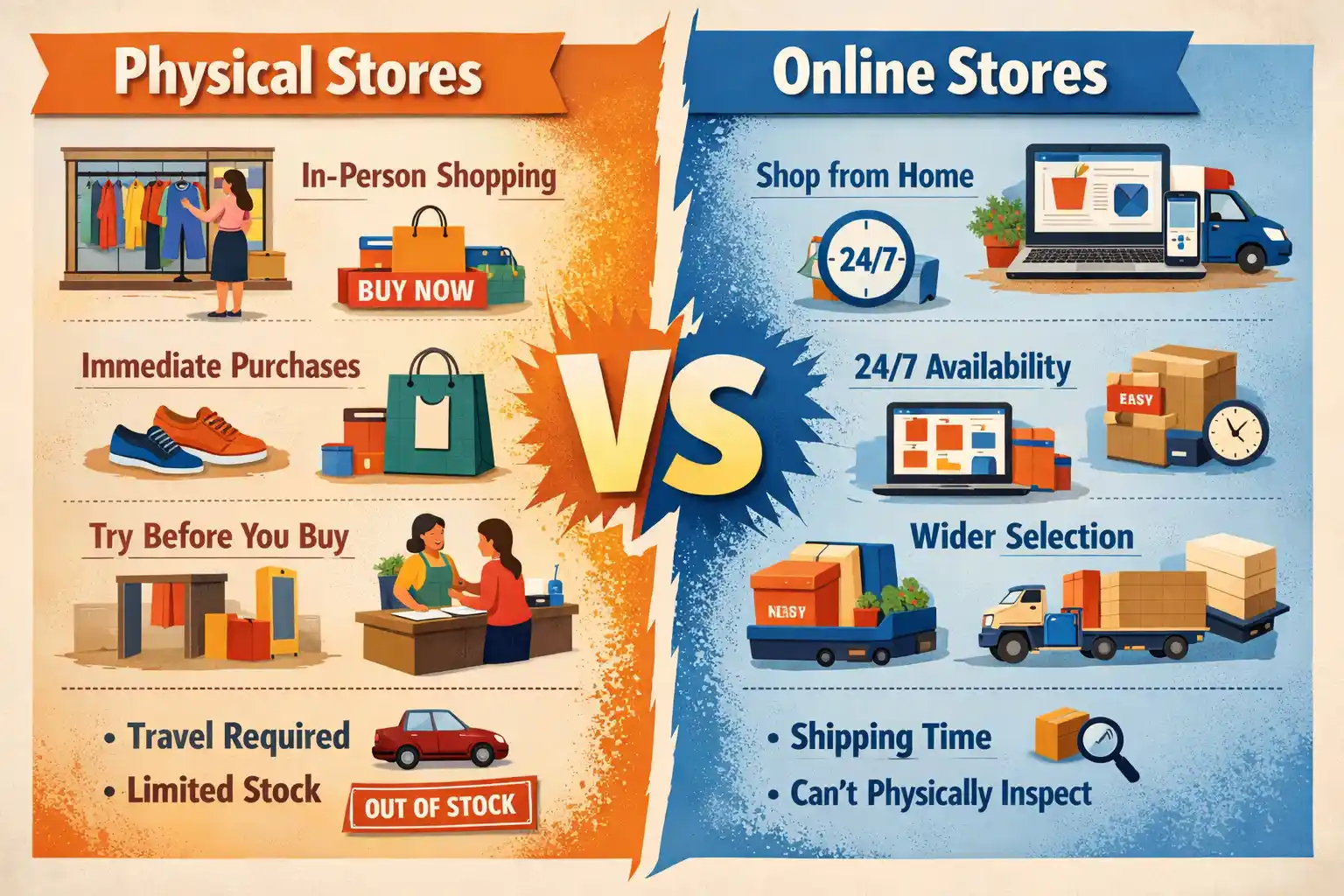
Conversely, physical store refers to the conventional outlet, essentially a brick and mortar shop that has physical options and customers visit the store to buy stuff. These stores provide a tangibility to consumer goods as people can see, touch, and try various products, before purchasing them.
They also provide the opportunity for direct interaction with staff, which can contribute to building trust and providing individual assistance. For the numerous customers, this human part would be a massive aspect of their whole shopping experience.
What Are Online Stores?
Online stores are operated via websites or mobile apps and enable customers to make purchases from any location at any time. They provide ease, variety, and ease of choosing between and among options.
From the comfort of their homes, customers can now search through the products, find reviews, and buy the item without actually going to the shops. This has made online shopping a popular option for many individuals.
Differences of Physical Between Online Stores
Customer Experience
A real face-to-face experience with the products at physical stores. This is usually necessary for things like clothes, electronics later on, and/or furnishings.
For the most part, online stores provide images, descriptions, and testimonials. They may not afford direct contact but they make up for it in convenience and speed.
Accessibility and Convenience
The best benefit of any online store is they can be accessible 24/7. Customers can buy at any time without bothering Filling store timings.
For physical outlets, the working hours are limited and consumers have to travel. On the other hand, though, they do make product accessible immediately, without any wait time for delivery.
Cost and Investment
Of course, there are expenses like rent, utilities, salaries, and upkeep to be covered when opening a physical store. That can add up, particularly in desirable areas.
The operational costs at online stores are typically lower. Businesses can begin with lower funding and scale gradually. This is the most preferred model by many companies these days as it has a cost-effective approach.
Reach and Market Size
They are tied to a single location and have a local customer base. To penetrate further, you need to set up more stores. Very costly.
E-shops reach everyone in the world. From the benefit of being able to sell to customers hundreds or even thousands of miles away to have the fact that it does not require a physical presence, a business can reach to just about anyone in the world actually.
Marketing Approach
Both models have different marketing strategies. Physical shops often go with local promotions, banners and word of mouth.
Digital marketing is crucial for online stores. It provides traffic and sales with strategies such as best seo company in delhi, social media marketing and ppc advertising services in delhi.
Designyze and such agencies help you realize how you can promote through the digital world. Designyze assists brands in cultivating visibility and targeting their audience as per the practical strategies it brings to the table.
Inventory and Management
And keeping inventory in physical stores comes with storage space to spare and necessitates manual tracking. Which sometimes cause excess or shortage of materials.
Digital or very technical systems are used by online stores for inventory management, which simplifies the whole process of tracking products and optimising its levels with best capabilities in real time.
Trust and Customer Behavior
They trust what they can see and feel, and that is also a reason why the customers still prefer physical stores. They have confident purchase of no waiting time.
But, trust is growing around online stores thanks to reviews, ratings, and secure payment methods. Customer behavioural approach is slowly adjusting to digital channels.
Digital Growth and Multi-Model Impact
Many businesses now operate a hybrid model with both ecommerce and bricks and mortar. That way, they get to give the best of both offline experience and online convenience.
Designyze is a digital marketing agency in Faridabad that collaborates with businesses to boost their online presence and complement their offline efforts. Combining local seo service in faridabad companies can also meet local customers and net customers in the market with in the roof.
Which One Is Better?
There is no one-size-fits-all answer. Businesses dependent on personal engagement and product experience are perfect for physical stores. Online stores are more scalable, more convenient to manage, and allow access to a larger pool of potential customers.
The proper alternative will depend upon your kind of enterprise, your price range, and your target market. More often than not, a mixture of the two is most effective.
Conclusion
There is a distinct difference in the mode of serving customers and operatory between physical stores & online stores. Online and physical stores each have their own appeal: the former delivers a tactile experience, while the latter inspires convenience and accessibility.
With consumer preferences constantly changing, businesses need to adapt and select the model that works for them. Recognizing the differences and implementing an effective marketing strategy for both offline and online can help the company flourish.