AI search is changing the way we find information about products, services, companies, etc., online. Rather than having to click through multiple links on a search page to find what we’re looking for, we’re being presented with direct answers to our inquiries on platforms like Google AI Overviews, Google AI Mode, ChatGPT, Gemini, and Perplexity. But considering this, companies are now facing a whole new problem: How do we know if our site/brand is actually showing up in AI generated search results?
What Is AI Search Visibility?
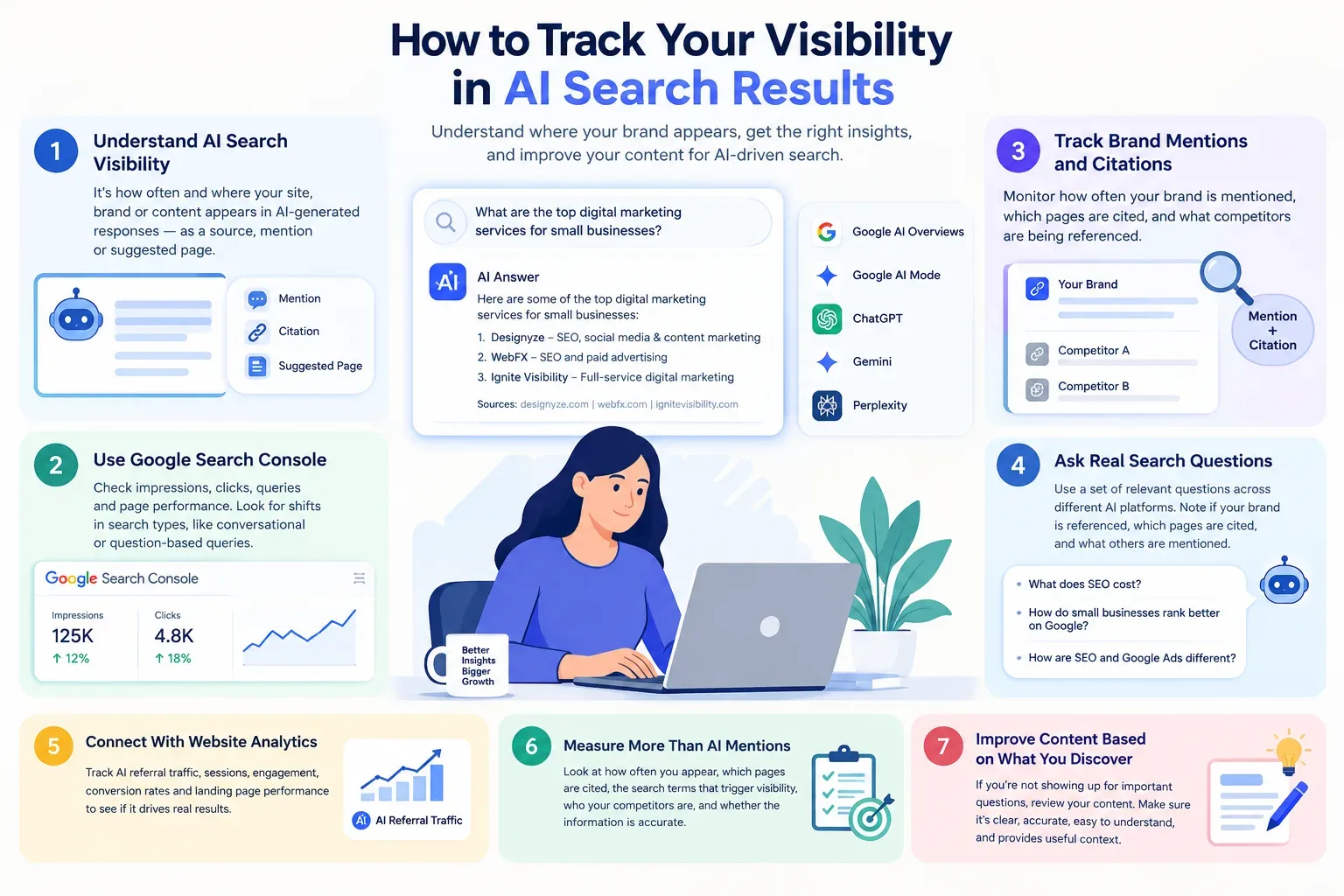
AI search visibility refers to how often and where your site, business or brand will appear in AI-generated responses. You could have a link from your site listed as a source; you could have your brand included in an AI response; and you could have a page on your site suggested to the user as a result of their query.
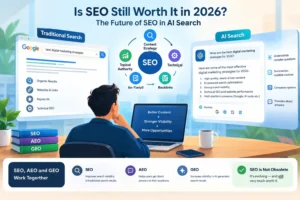
The following example illustrates how a user could type into an AI-based search engine “What are the top digital marketing services for small businesses?” The results returned by the AI-based search engine would likely list multiple companies/resources as opposed to presenting them as the “top ten” blue links that are typically found in a standard Google Search.
Therefore, a business’s website may rank well traditionally on the Internet, however, it has little exposure through AI-generated search results. By evaluating both types of visibility, a business will be able to determine if its online marketing strategies are effective.
Start With Google Search Console
Google Search Console continues to be a crucial resource for analyzing your site’s search performance. It provides data on impressions, clicks, queries, pages, and additional search-related metrics. Google has also introduced reports regarding generative AI features, which will allow you to better understand how your website performs in emerging search environments.
Rather than only focusing on how well each keyword performs individually, also observe any larger shifts in the categories of searches (queries) that lead to traffic on your site (impressions) and/or resulting clicks. For example, conversational and/or question-based searches may indicate areas of interest or topics users are researching.
Search Console will not give you a full view of all AI generated answers from all platforms. However, it will give you some great first party data about how visible you are in Google’s search ecosystem.
Track Brand Mentions and Citations
Traditional SEO and AI Search differ on many levels; however, one of the most significant differences lies in the value placed upon mentions and citations.
An AI platform makes reference to your company, site, products and services as part of its reply; this is referred to as a “mention”. The use of citations is more powerful than a simple mention since they can include references to the sources used by the AI platform to generate its response, or links directly to specific web pages.
The two are able to build brand recognition. A customer might hear about your business in a response from an artificial intelligence system and not go directly to your site. This means if you are only tracking visits to your site, then you could miss the fact that someone heard about you through another source.
Therefore, companies need to consistently see if they appear as search results for related inquiries concerning their industry, product, service, or location.
Create a Set of Real Search Questions
You can track how well-known your artificial intelligence products are by asking a consistent group of questions that potential customers will most likely ask.
Digital marketers may be asked questions like, “What does SEO cost?” “How do small businesses rank better on Google?” and “How are SEO and Google Ads different?”
Ask these questions to various artificial intelligence (AI) systems and note down if your company is referenced; what specific web pages the AI cites; and what other companies the AI refers to. This will help you keep track of how often your brand is mentioned on different AI platforms. It is better to conduct this research periodically rather than just once.
The way in which AI generated responses appear will differ based upon each search performed. Therefore, a single test is not indicative of the long-term ranking position. Regular testing provides better insight into general trends regarding visibility.
Connect AI Visibility With Website Analytics
Visibility can be valuable; however, businesses must ultimately determine if there are benefits that contribute to significant results.
Analytics platforms can be used to track referral traffic generated by AI services when it is directed back to a website. By looking at sessions, engagement, conversion rates, and landing page performance you can determine if the AI-referred traffic has value.
While the AI’s “discovery” process is not guaranteed to generate a quick visit to your site, someone might see your business name in one of the AI responses, keep it in mind and then use Google or find you on your own site.
AI visibility is more than just another way to get traffic to your site; it is a signal for discovery and awareness.
Measure More Than AI Mentions
An effective search visibility strategy using artificial intelligence will combine many different measurements. This includes: -How often your company name comes up -What web pages are being referred to -What search terms/questions cause your company to show up -Who else is showing up as competition -Are the details regarding your company accurate?
The importance of accuracy cannot be overstated. An AI system that lists you as a source will have no value to you if it provides you with information that has become obsolete, is incomplete or misleading.
Your goal should then be to determine the quality and circumstances surrounding your visibility as opposed to just measuring how many times you are mentioned.
Improve Content Based on What You Discover
Tracking becomes valuable when it leads to better decisions.
If people aren’t consistently finding you in search results when they ask important questions about your products or services, you may need to examine whether your content is doing a good job of answering their questions. Critical information must be readily accessible, simple to understand, factually correct, and provide appropriate background.
If people aren’t consistently finding you in search results when they ask important questions about your products or services, you may need to examine whether your content is doing a good job of answering their questions. Critical information must be readily accessible, simple to understand, factually correct, and provide appropriate background. Businesses can use these insights to identify content gaps and improve their overall search strategy. A digital marketing company such as Designyze can also use AI search visibility data to identify these opportunities and develop content that better answers relevant user queries.