Social media has created a new way for companies to connect with their customers. Customers now find out about brands, look up product comparisons, check customer reviews, and purchase items using social media sites like Instagram, Facebook, LinkedIn, and YouTube. These sites provide businesses with the ability to connect with potential customers on the sites that those individuals use daily.
Businesses cannot just create social media profiles and then rarely post anything to those profiles. Rather, businesses need to have a clear plan for using social media, relevant content to share, consistent communication with their followers on social media, and an understanding of who their followers are. These are the elements that make social media marketing effective.
With the proper strategies, companies will be able to enhance their brand recognition, create lasting connections with customers, receive more inquiries from prospective clients and maintain a sustained level of growth.
What Is Social Media Marketing?
Social media marketing uses social networking sites (SNS) as a means of promoting businesses, providing valuable content, interacting with consumers, and encouraging consumers to purchase products/services. Examples include organic posts, short video clips, “stories,” paid advertising, influencer collaborations and consumer interaction, to name a few.
The purpose of using social media for marketing is more than simply collecting likes and followers. Social media marketing is designed to help businesses connect with the appropriate audience and convert that interest into website visits, inquiries or purchases.
A B2B organization can utilize the professional networking platform LinkedIn to provide insight into their industry and make connections with key decision-makers.
Why Social Media Marketing Matters for Businesses
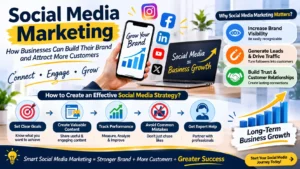
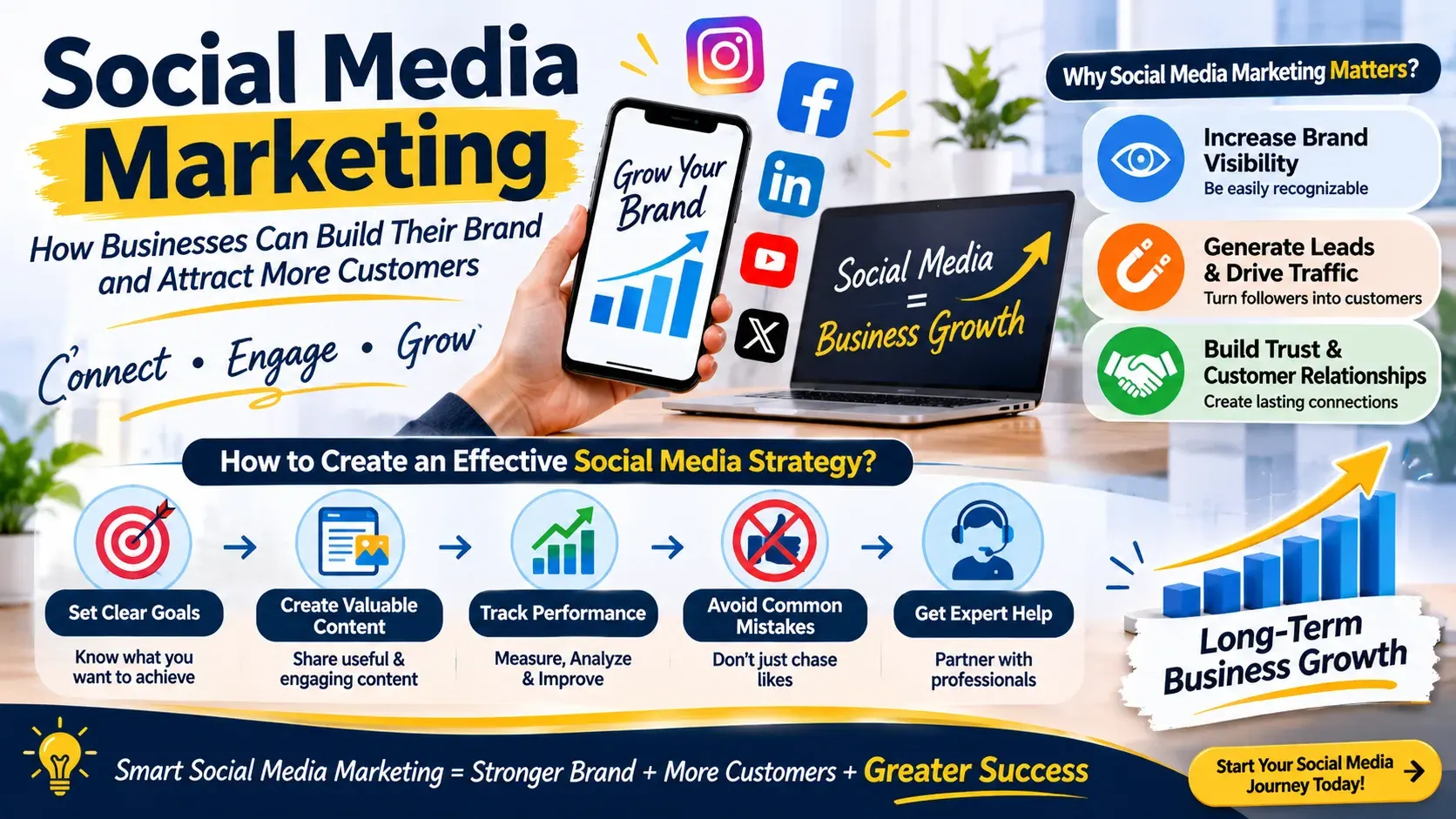
By regularly sharing relevant content with their target audience, businesses are able to maintain visibility within that group. In addition to being easily identifiable by name and logo, consistent branding, clearly stated messages and a recognizable voice help to make a company memorable to consumers, which can lead to increased exploration of a business’s products/services.
Generate Leads and Website Traffic
Social Media can direct potential consumers to the service pages, product demonstrations, contact forms and blog posts of a business. Paid social media advertisements can broaden the scope of an audience base through targeting of those who are most likely to be interested in the products/services offered. Both organic content and paid advertising campaigns are most effective when they have clearly defined goals.
Build Trust and Customer Relationships
Brands become less intimidating through responsive customer support, behind-the-scenes content, customer feedback, and open communication with customers. Businesses can learn about what customers are concerned about by responding to comments and messages from customers.
How to Create an Effective Social Media Marketing Strategy
The first decision to be made when considering the use of social media is what you want social media to achieve for your business. For example, do you want social media to help raise awareness of your brand, drive traffic to your website, generate leads for potential customers, advertise products/services, or encourage customer loyalty through repeat sales? If you have clearly defined goals for using social media, then you will be able to direct your efforts toward achieving those goals.
Create Content That Provides Value
An effective social media content strategy will have a balance of promotion, providing useful information, and having conversations. A business could provide helpful hints or tips, answer typical questions, introduce employees, show off products, and even talk about what’s going on in the world of business.
Short video clips, carousel images, infographic representations, and photographic images are some of many methods to share your message. By trying various format types, you can determine which method is most effective for communicating with your target audience.
Track Performance and Improve
Businesses can use social media analytics to assess how many people saw your posts (reach), how much they interacted with your post (engagement), whether or not they clicked on links in your post (link clicks), if you generated a lead from someone who viewed your post (leads), if you made a sale based on someone viewing your post (conversions), and the cost associated with running ads on social media. Growth of your followers is not indicative of success. Business owners should review their performance on a regular basis to determine what works and what doesn’t in terms of creating better content, improving targeting, and determining how much money should be spent on advertising campaigns.
Common Social Media Marketing Mistakes to Avoid
Publishing the same content to all platforms, concentrating solely on getting likes and followers, ignoring customer communications, and posting on an irregular schedule can diminish success. Business owners need to publish content that is appropriate for each platform used, provide clearly defined calls to action, and maintain a consistent brand identity.
Also, don’t make promises that you can’t deliver. The success of your marketing efforts depends upon factors such as: the amount of competition; the budget allocated to the project; how much demand there is for your product/service; the quality of your content; and, the value of what you are offering.
How Professional Social Media Marketing Services Can Help
Effective management of social media includes researching your target audience, developing relevant content, creating campaigns, managing communities, placing ads, and measuring the success of each of these areas through reports on their performance.
Professional social media marketing services will coordinate the individual components of this process. The service can provide support in various forms based on business requirements. Support can come in the form of managing the account(s), creating content, running ads via paid social media, and analyzing how well the ads perform.
Businesses will find a way to align their online presence with their marketing goals at Designyze. There is no one-size-fits-all solution; the most effective plan will be based on the company’s target market, financial resources, service offerings, and potential for growth.
Social Media Marketing and Long-Term Business Growth
Social media is most effective when it is part of a larger customer experience. A potential customer may find out about your business from a social media post, click to go to your website, check out some reviews, and then make an inquiry.
Creating a connected customer experience requires having relevant website content, clear information about services, and an easy-to-use contact form. A company can maintain its relevance with customers by analyzing performance and modifying strategies based upon customer preference.
Conclusion
Social media marketing can help companies build their brand awareness, reach out to possible new consumers, provide helpful content to its audience, and create opportunities for business expansion. To achieve significant outcomes from social media marketing it takes much more than simply posting often. It requires an understanding of your target demographic, identifying the right social media platforms, producing content that is relevant to your target demographic, and tracking your performance.